

Oceans of Change: How Rising Tides Are Redrawing the World’s Map
Introduction
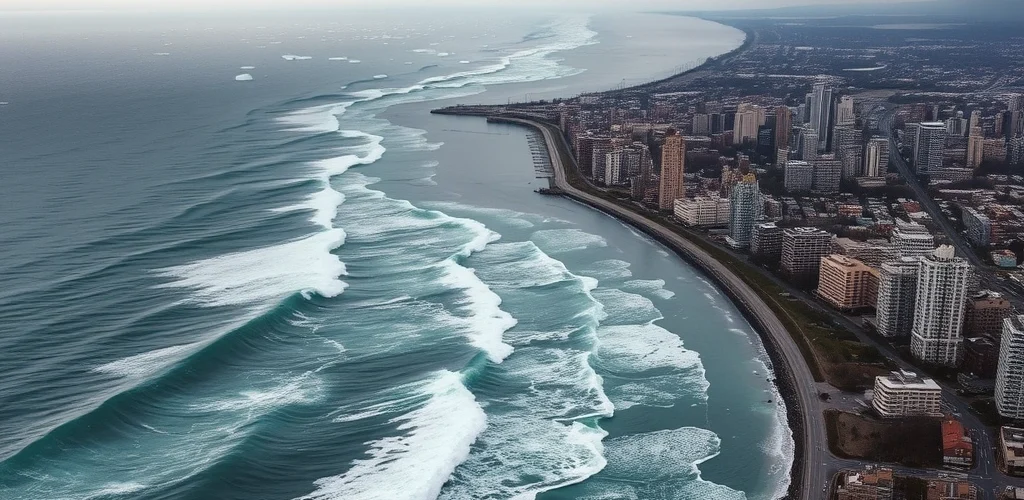
The world’s oceans are rising at an alarming rate, reshaping coastlines and threatening the livelihoods of hundreds of millions of people. As polar ice caps melt and ocean temperatures climb, the once-distant threat of sea-level rise is now a stark reality for communities from Miami to Mumbai. This global phenomenon is not just an environmental issue; it is a humanitarian crisis in the making.
The Science Behind the Surge
According to the Intergovernmental Panel on Climate Change (IPCC), global sea levels have risen by about 20 centimeters since 1900, with the rate accelerating dramatically in recent decades. The primary drivers are thermal expansion—water expands as it warms—and the melting of glaciers and ice sheets in Greenland and Antarctica. In 2023 alone, the global mean sea level reached a record high, 9.4 centimeters above the 1993 average.
Vanishing Island Nations
For low-lying island nations like Tuvalu, Kiribati, and the Maldives, rising seas are an existential threat. Entire populations may have to relocate within decades. The government of Tuvalu has already begun digitizing its history and culture, and has a treaty with Australia to allow citizens to move there. In the Maldives, artificial islands are being built higher to escape the waves, but the cost is staggering.
Megacities on the Brink
Coastal megacities are also on the front lines. Jakarta, the capital of Indonesia, is sinking so fast that the government is moving the capital to a new location on Borneo. In Dhaka, Bangladesh, millions live just meters above sea level, facing frequent flooding and saltwater intrusion. Even wealthy cities like New York and London are investing billions in seawalls and flood barriers, but experts say these are temporary fixes.
The Human Cost
The human toll is immense. Climate refugees are expected to number in the tens of millions by 2050, according to the World Bank. These people will lose their homes, livelihoods, and cultural heritage. The ethical dilemma is glaring: the countries least responsible for greenhouse gas emissions are often the hardest hit. This has sparked calls for climate justice and compensation from developed nations.
Adaptation and Innovation
Despite the bleak outlook, there are glimmers of hope. The Netherlands has pioneered advanced flood defense systems, including floating homes and storm surge barriers. In the United States, cities like Norfolk, Virginia, are implementing nature-based solutions, such as restoring wetlands to buffer storm surges. Technology is also playing a role, with early-warning systems and improved modeling helping communities prepare.
A Global Imperative
Addressing sea-level rise requires unprecedented global cooperation. The Paris Agreement set a goal to limit warming to 1.5°C above pre-industrial levels, but current pledges fall short. As the world grapples with this slow-motion disaster, the choices made today will determine the future of coastal populations for generations. The ocean is rising, and so must our resolve.

Nossa Audiência
Posts Relacionados
 Mundo
Mundo Tempestade Solar Colossal Atinge a Terra: Impactos e Previsões para os Próximos Dias
 Mundo
Mundo
Futuro Sombrio: Estudo Revela que Derretimento das Geleiras pode Aumentar o Nível do Mar em 2 Metros até 2100
 Mundo
Mundo
Oceans of Change: How a Tiny Pacific Island Nation Is Reshaping Global Climate Law
 Mundo
Mundo
Mundo em Alerta: Mudanças Climáticas Aceleram Eventos Extremos
 Mundo
Mundo